Intent disappears fast
“I should go work out” is easy to postpone when there is no one else expecting you.
Product strategy · UX/UI · AI-assisted native iOS build
Turning “who wants to go with me?” into a product built around real plans, real timing, and people nearby.
Alongside is a social coordination product designed to make everyday activities joinable. Instead of asking people to build a social network first, the product starts with something concrete: what you are doing, when you are doing it, where it is happening, and whether someone nearby wants to join.
The opportunity
The idea started with a repeated real-world problem: people want to walk, run, lift, play pickleball, or simply get out of the house, but the hardest part is often finding someone nearby who is available at the same time.
The product opportunity was not to create another fitness tracker or another profile-browsing network. It was to make ordinary activities joinable.
“I should go work out” is easy to postpone when there is no one else expecting you.
A perfect activity match is not useful if the other person is never free when you are.
Too much messaging, planning, and uncertainty can kill an activity before it starts.
Product principle
“I’m doing this, at this time, in this place. Want to come?”
That decision shaped the feed, plan details, join flow, creation flow, and trust model.
The core experience
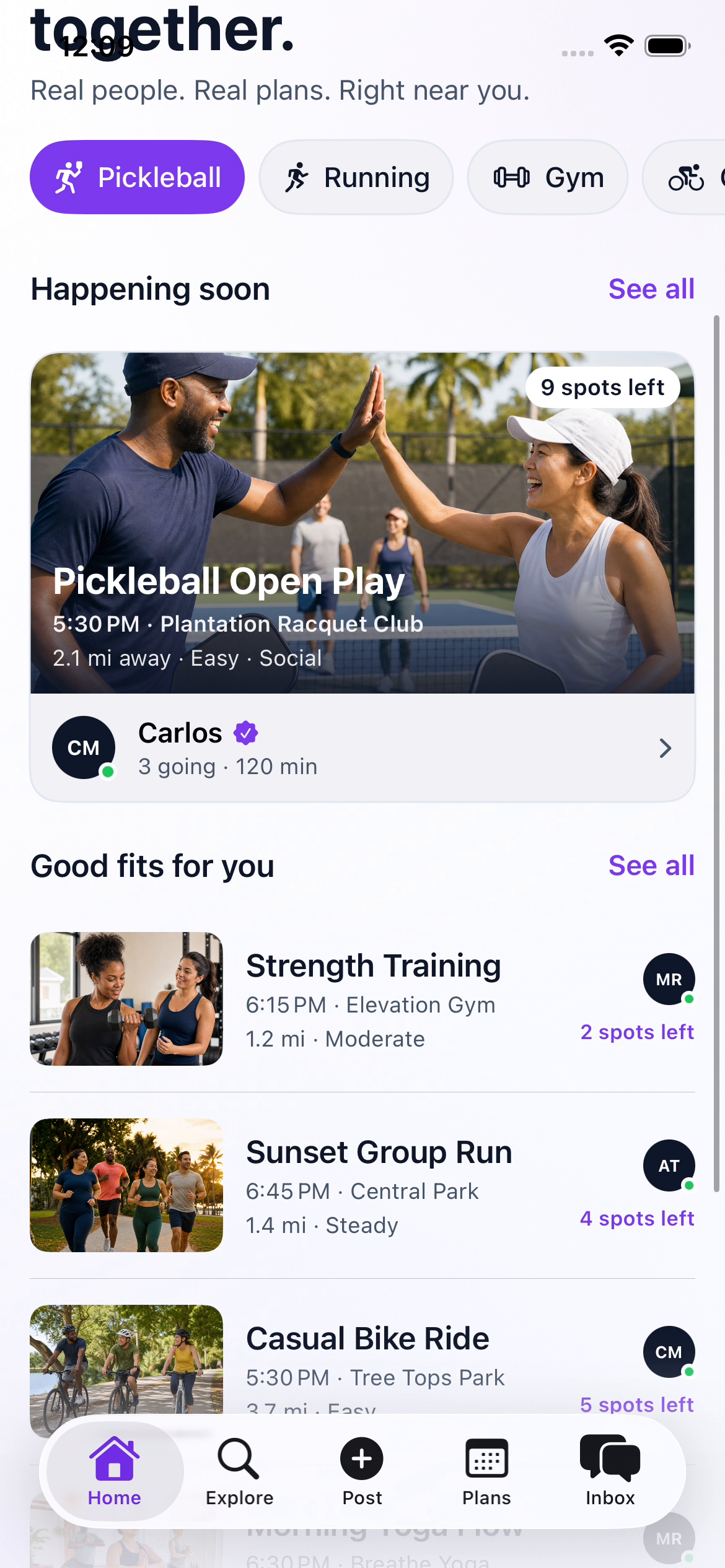
The primary loop minimizes the distance between intent and coordination. Each step surfaces only the information needed to make the next decision.
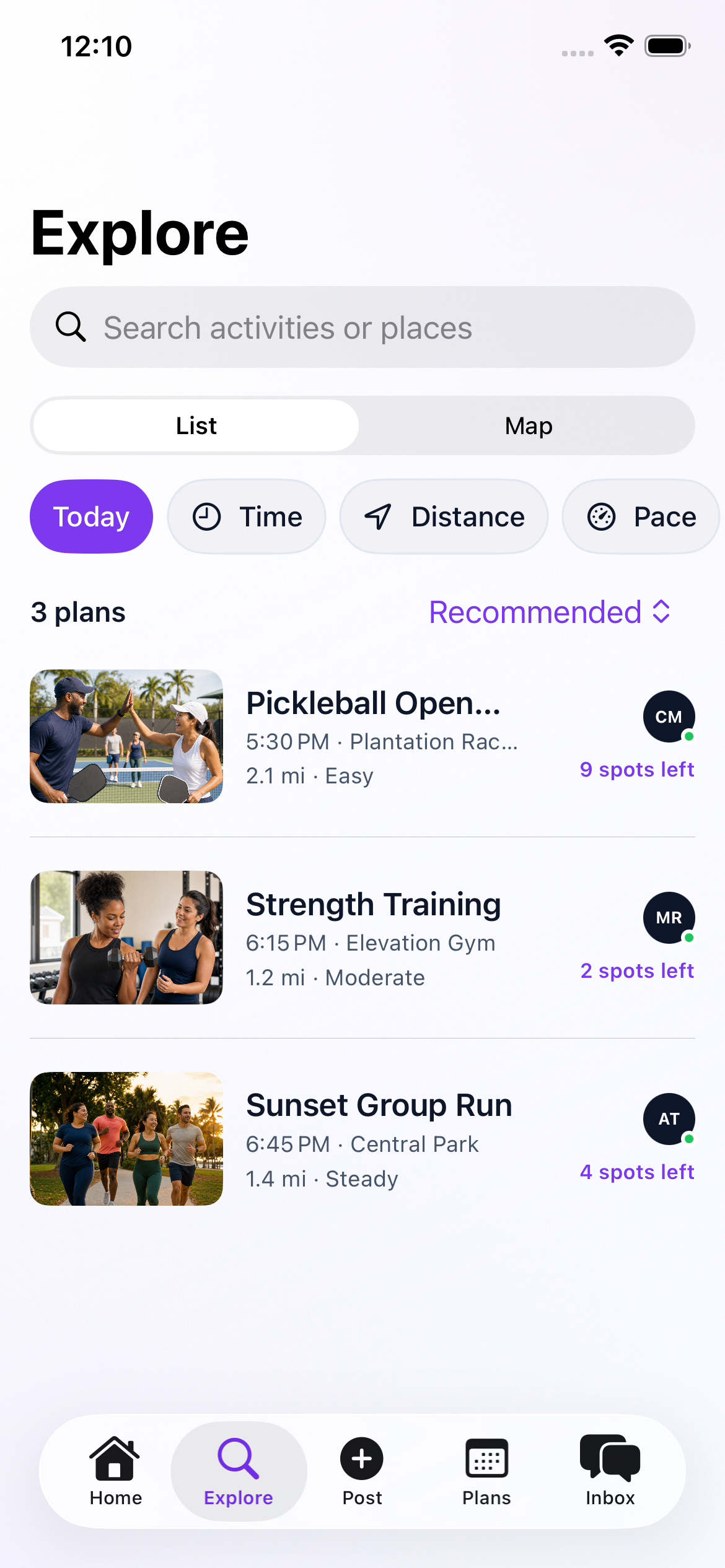
The home feed emphasizes activity, time, distance, pace, host, and remaining spots instead of generic profiles.
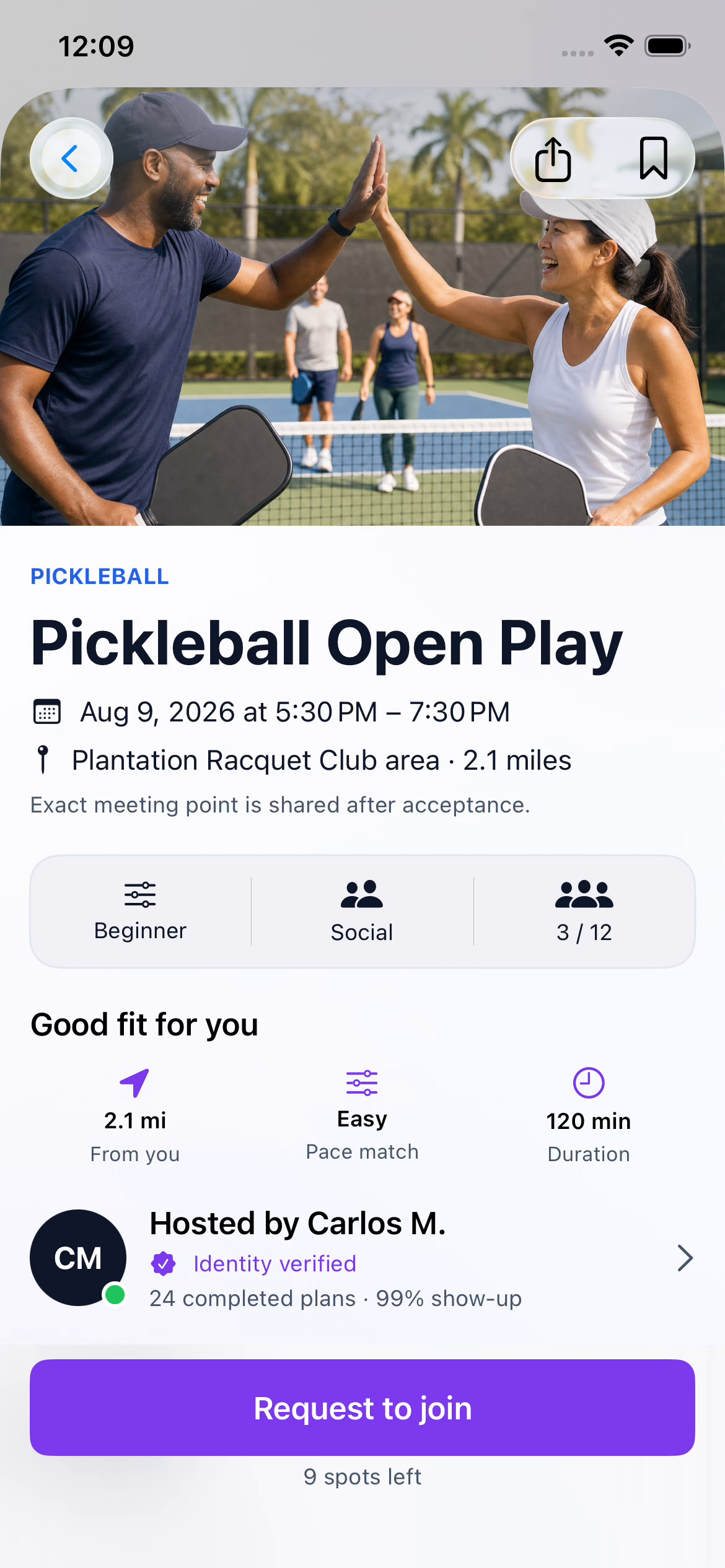
Plan details surface the practical signals that matter: when, where, pace, group size, distance, and host credibility.
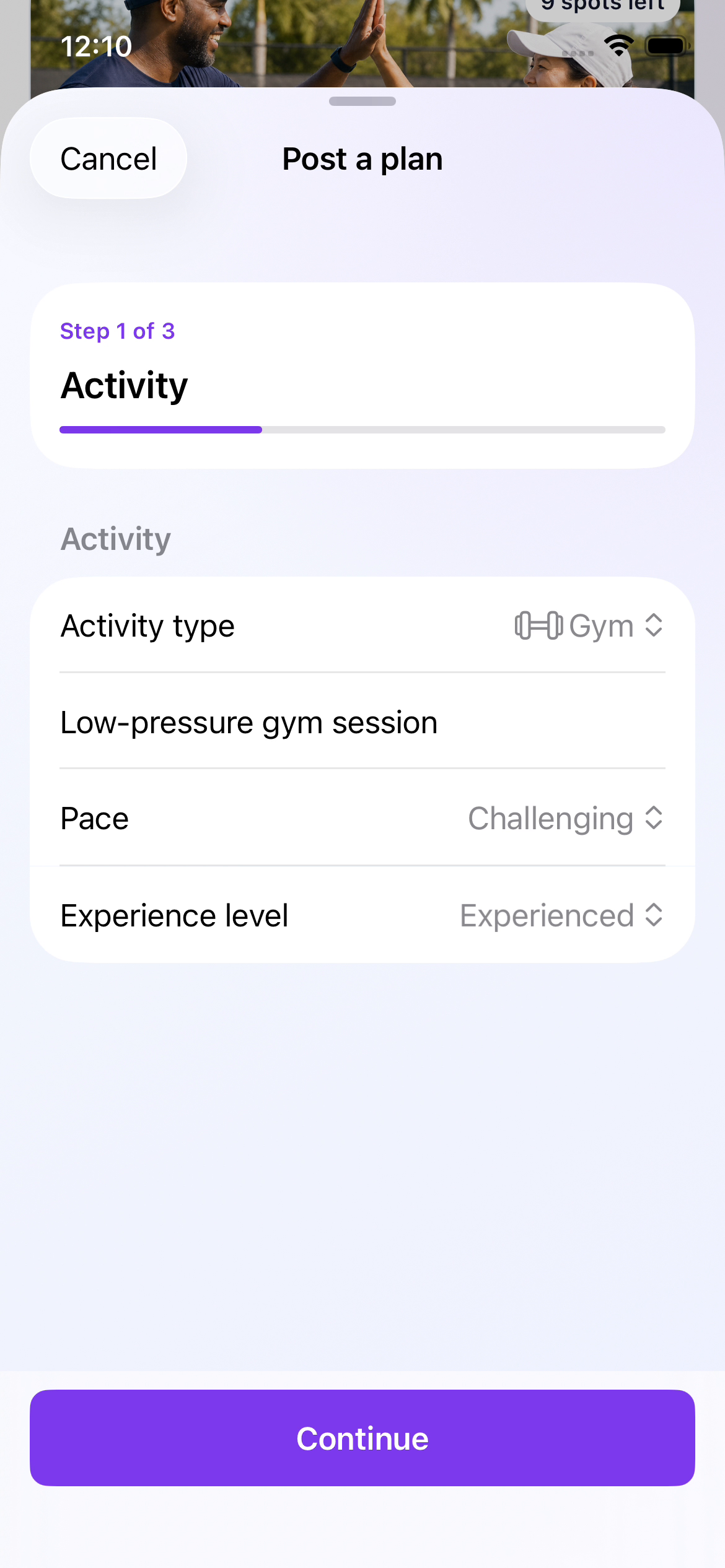
The creation flow is intentionally structured around activity, timing, location, and fit instead of event-management overhead.
Key product decisions
The primary object is the activity plan. People become relevant because they are attached to something happening.
Distance, start time, duration, and pace help users decide whether a plan is realistically joinable.
Posting should feel like saying “I’m going” rather than creating a formal event.
Profile context, identity verification, location privacy, blocking and reporting, and community standards are treated as product features.
Discovery + trust
Cold-start products need more than a feed. Alongside gives users ways to filter, understand fit, and judge safety even when nearby supply is still growing.
Time, distance, and pace help people narrow the feed without turning discovery into a profile search.
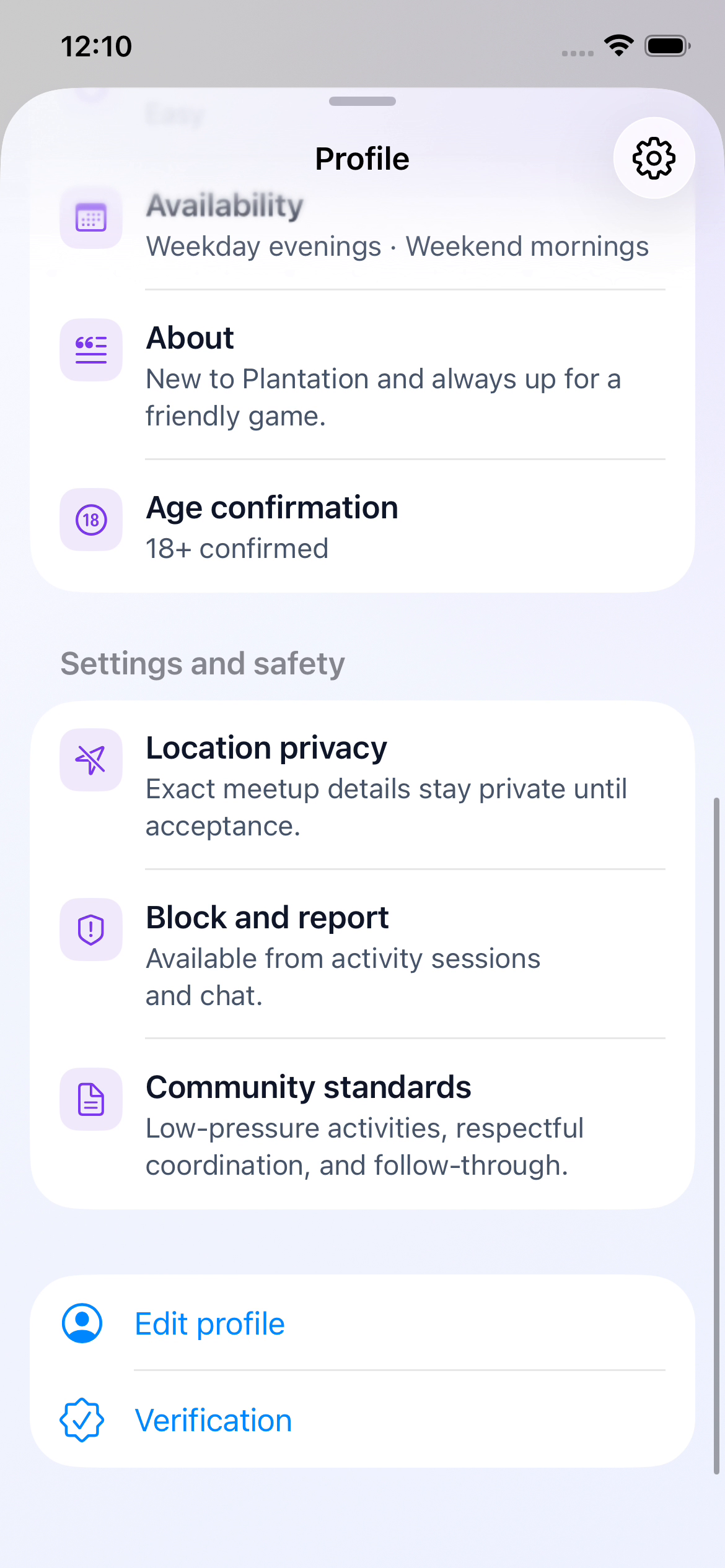
Location privacy, block and report, age confirmation, verification, and standards are part of the experience.
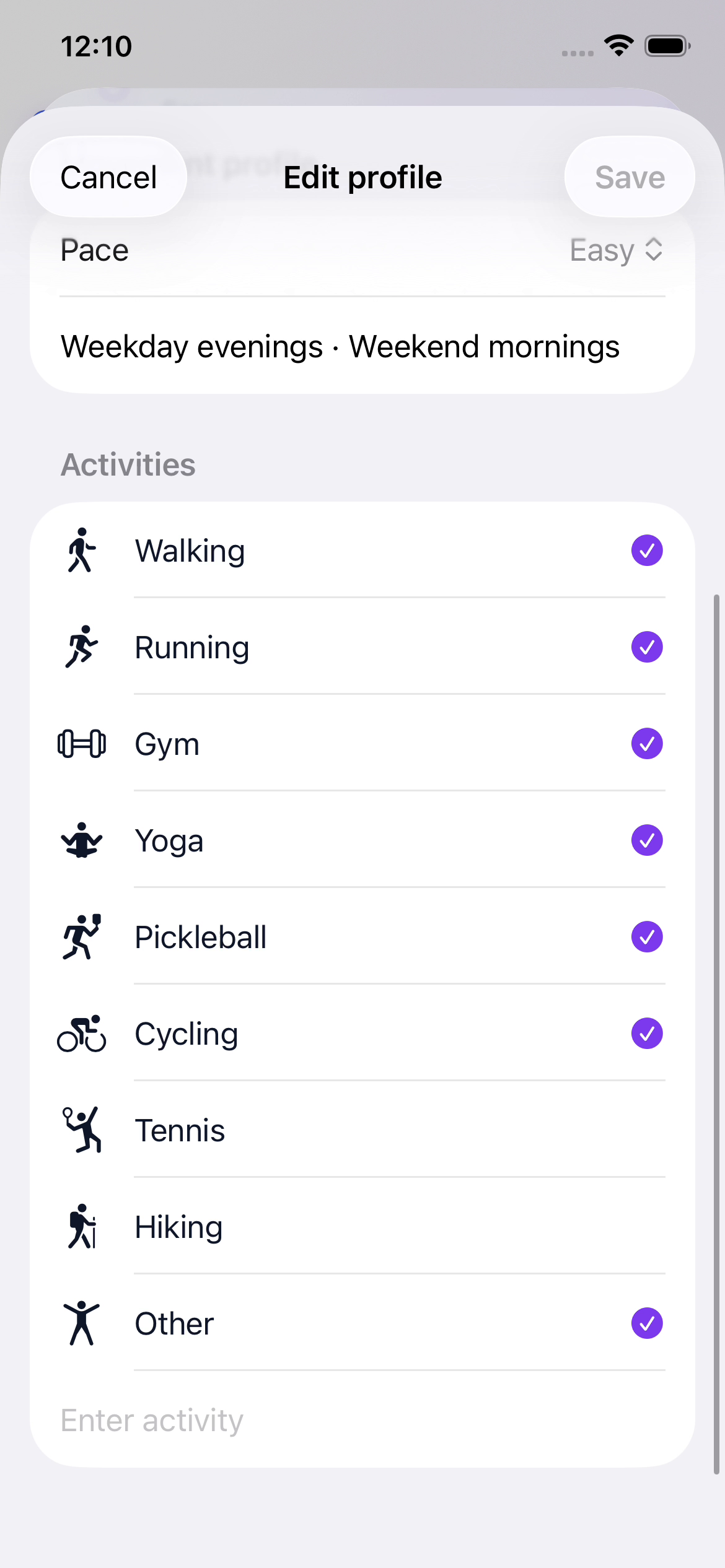
Activity preferences, pace, and availability improve relevance while keeping the plan as the center of the product.
AI-assisted build process
I used AI throughout Alongside as a product and implementation partner. The workflow moved from research and strategy into design, working native iOS builds, simulator QA, and repeated iteration.
Used for ideation, product strategy, competitor thinking, MVP prioritization, user flows, edge cases, microcopy, trust scenarios, and design critique.
Used to shape the product experience, interaction hierarchy, visual system, feed density, creation flow, and core screen behavior.
Used heavily to translate product requirements into native iOS implementation, iterate on features, debug issues, and refine behavior.
Used to work directly with the codebase, review implementation, manage changes, and validate fixes across iterations.
Used to test real navigation, layouts, interaction states, visual fidelity, edge cases, and the end-to-end iOS experience.
Current state
Alongside has moved beyond a concept into a functioning native product experience with a public positioning and waitlist site.
Visit AlongsideReflection
It is a lightweight coordination layer for real life. The product becomes more useful when it reduces the distance between wanting to do something and having an actual person to do it with.